
Religion and Beliefs of the Lanna People in Northern Thailand
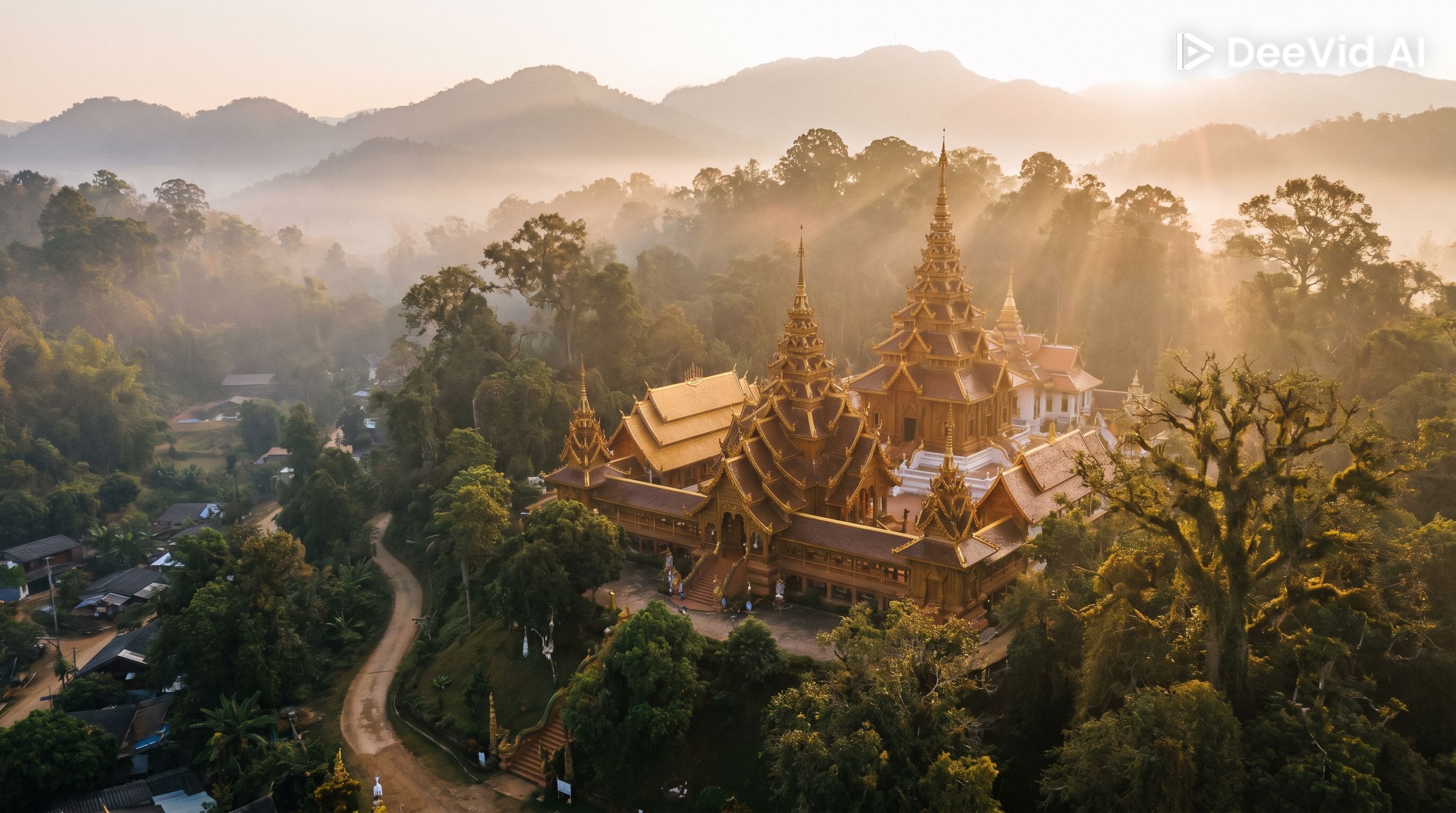
The Lanna people of northern Thailand carry one of the most distinctive and layered spiritual traditions in Southeast Asia. Rooted in the ancient Lanna Kingdom — which flourished from the 13th to the 18th century across what is today Chiang Mai, Chiang Rai, Lampang, and surrounding provinces — their religious life is a living tapestry woven from Theravada Buddhism, animism, and Brahmanistic ritual. To understand Lanna spirituality is to step inside a world where sacred forests, ancestral spirits, and golden temple spires coexist in quiet harmony. Unlike the central Thai Buddhist tradition, Lanna religious practice retains strong traces of pre-Buddhist belief. Spirit veneration, sacred water ceremonies, and the propitiation of guardian deities have never been replaced — only layered beneath and alongside the teachings of the Buddha. This syncretic quality is precisely what makes Lanna faith so enduring and so vivid.
The Foundation: Theravada Buddhism in Lanna Culture
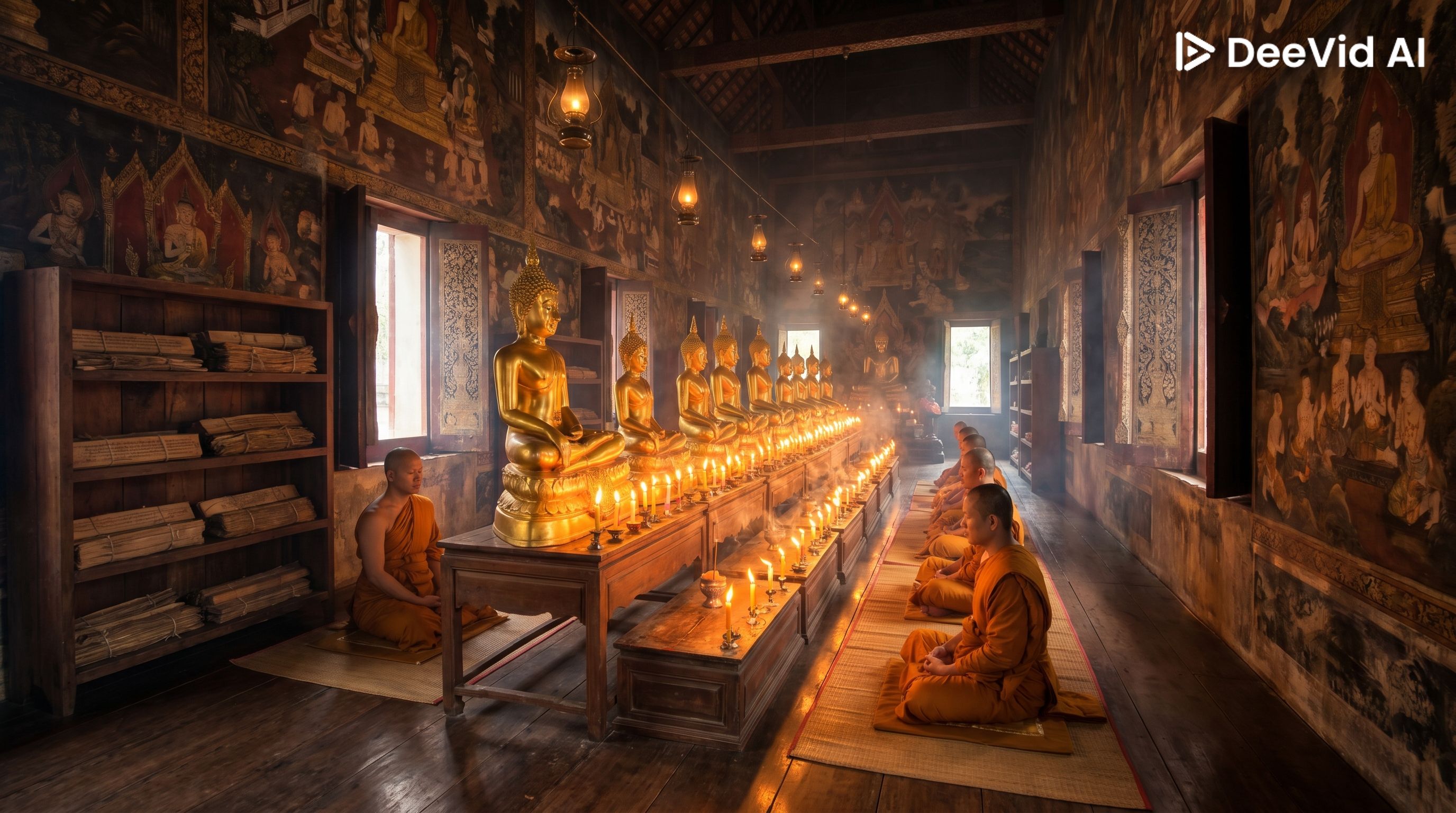
Buddhism arrived in the Lanna region through Mon missionaries, taking root under King Mangrai who founded Chiang Mai in 1296.
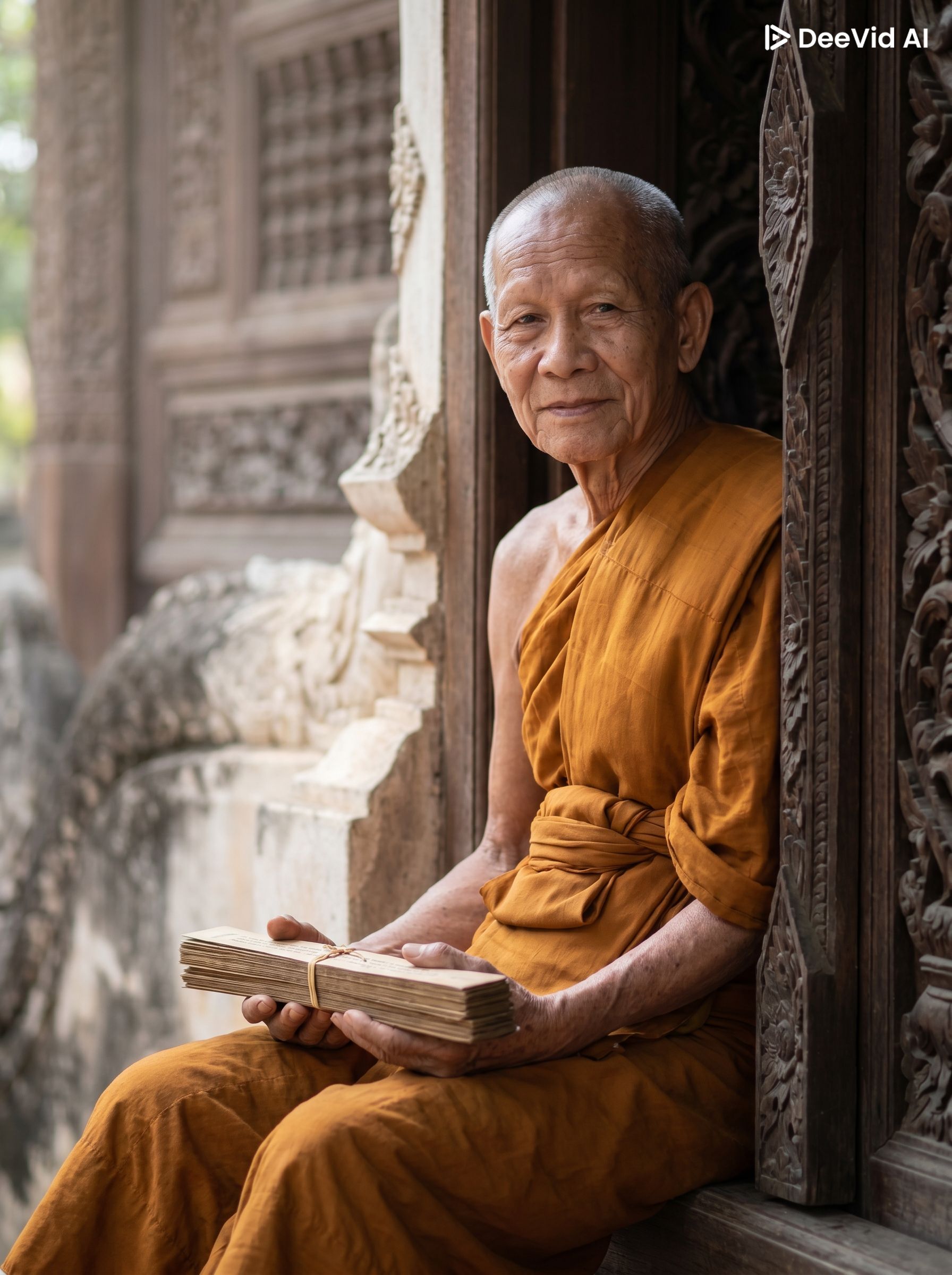
The Lanna court became a great patron of Buddhist learning, developing its own distinct scriptural tradition — the Tham script — used to preserve Pali texts, sermons, and ceremonial manuals. Lanna Buddhism is formally of the Theravada school, sharing its core doctrine with the Buddhism practised across Thailand, Myanmar, Laos, and Cambodia.
Yet in practice, the rhythm of Lanna Buddhist life is shaped by a unique calendar of local festivals and merit-making traditions. The Poi Luang festival gathers entire villages to offer food to monks, sponsor the casting of Buddha images, and erect temporary pavilions decorated with traditional Lanna paper lanterns. Merit made during Poi Luang is believed to benefit not only the living but also deceased ancestors, reinforcing the Lanna understanding that the living and the dead remain spiritually bound.
The Spirit World: Phi and the Animist Foundation
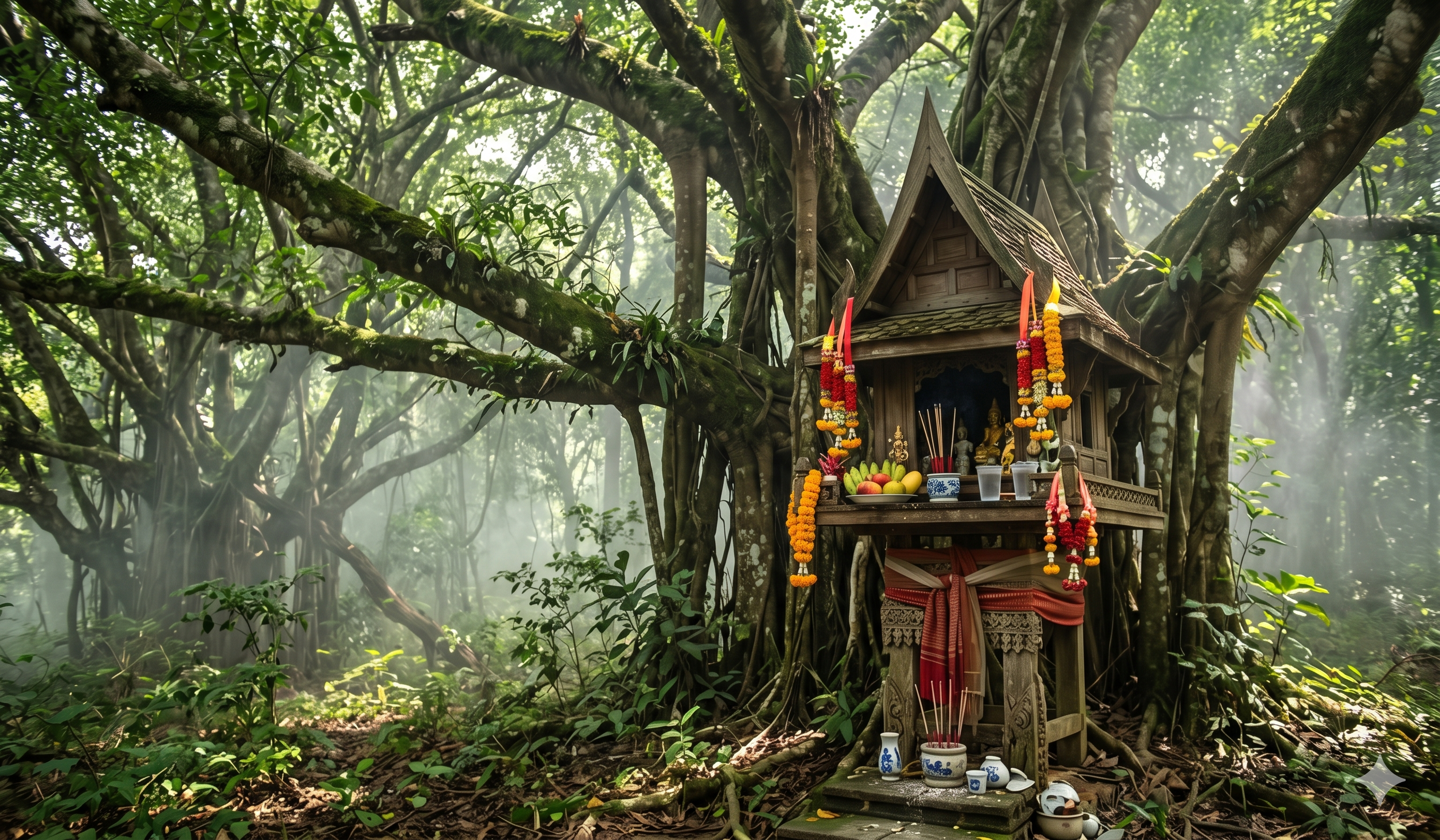
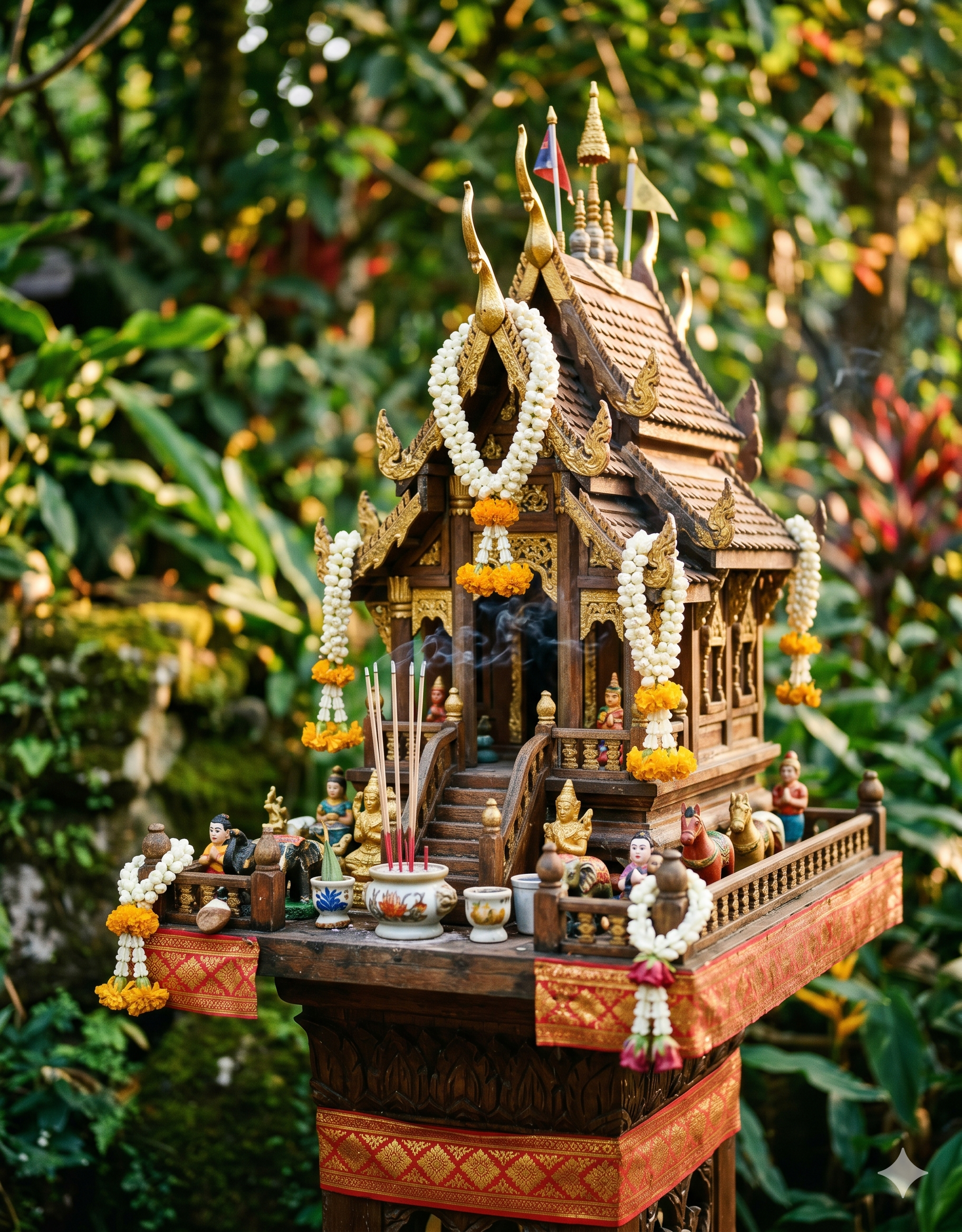
Beneath the gilded roof of every Lanna temple lies a much older spiritual landscape — the world of phi, or spirits.
Lanna animism predates Buddhism by centuries and continues to operate alongside it with remarkable vitality. Spirits inhabit rivers, ancient trees, rice fields, mountain passes, and every household compound. The most important spirit in Lanna household life is the phi pu ya — the ancestral spirit of the family lineage. Every traditional Lanna home maintains a small sacred space where offerings of food, candles, and flowers are regularly placed to maintain harmony with the unseen world.
Village guardian spirits and the hereditary ritual specialists who tend them.
Village-level spirit veneration centres on the phi muang — the guardian spirit of the community — and the phi pu sae ya sae, primordial ancestral spirits of the founding clans of ancient Lanna settlements. Each year, communities hold collective ceremonies at outdoor shrines to renew their relationship with these guardian beings, offering buffalo or pig sacrifices, traditional music, and ceremonial dances.
These rites are handled not by Buddhist monks but by hereditary ritual specialists called mor phi or spirit doctors. Their knowledge — passed down through family lines — encompasses the specific offerings, chants, and protocols required to maintain harmony between the living community and its invisible guardians.
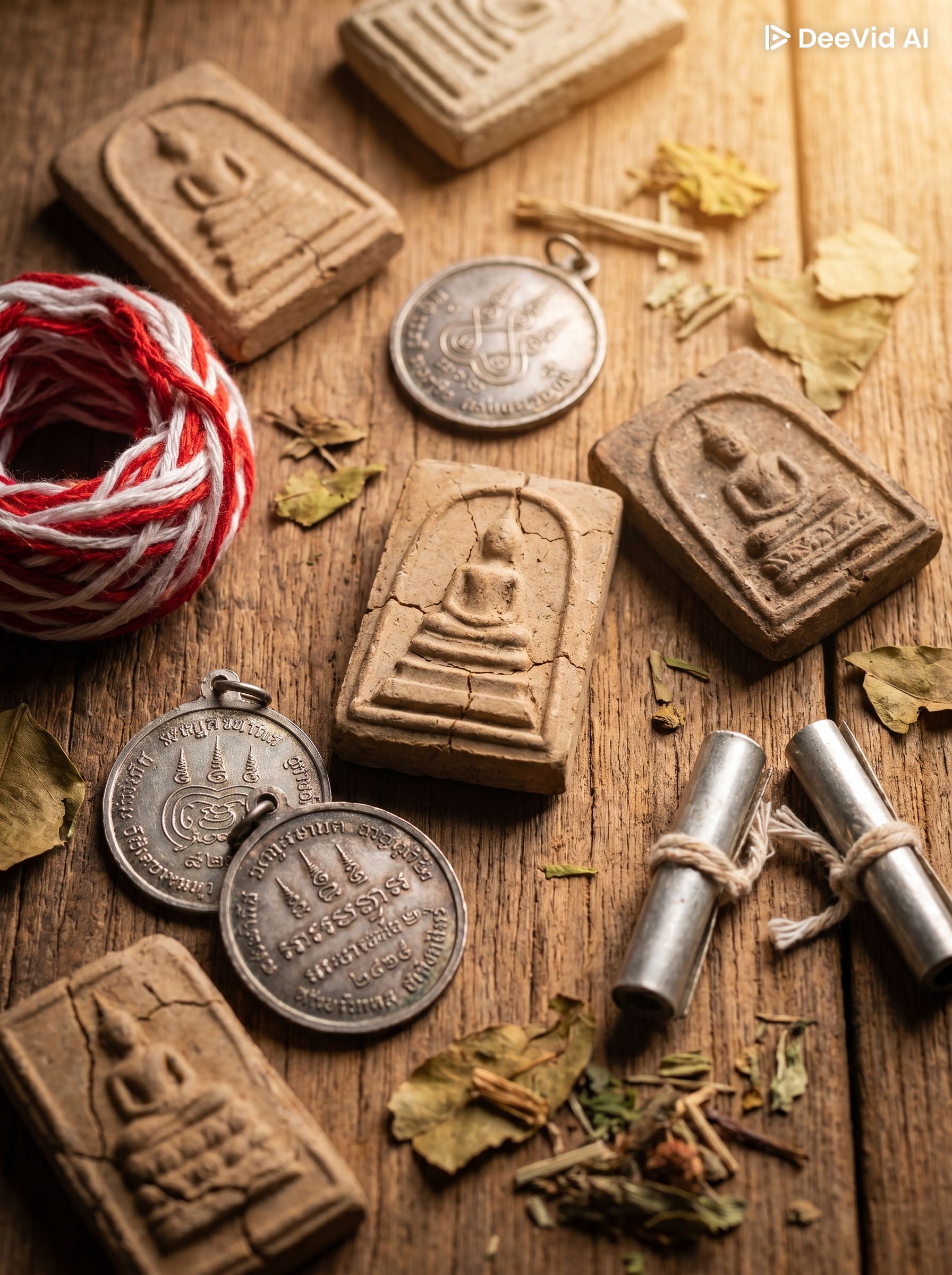
Sacred Objects and Protective Amulets of the Lanna Tradition.
The Lanna tradition has produced some of Thailand's most highly venerated sacred objects. The Phra Phuttha Sihing Buddha image — enshrined at Wat Phra Singh in Chiang Mai — occupies a place of supreme reverence. Lanna amulets are crafted from sacred clay mixed with consecrated herbs, beeswax, and ash from old scriptures, often bearing the images of revered Lanna monks or geometric yantra diagrams in the Tham script.
Popular Lanna monks whose images appear on amulets include Khruba Sriwichai — the revered early 20th-century monk known as the "Saint of the North" — and Khruba Bunchum, whose influence draws large followings today. The power of a Lanna amulet is understood to derive from the accumulated merit and spiritual concentration of the monk who consecrated it.
Brahmanic Ritual and the Sukhwan Ceremony
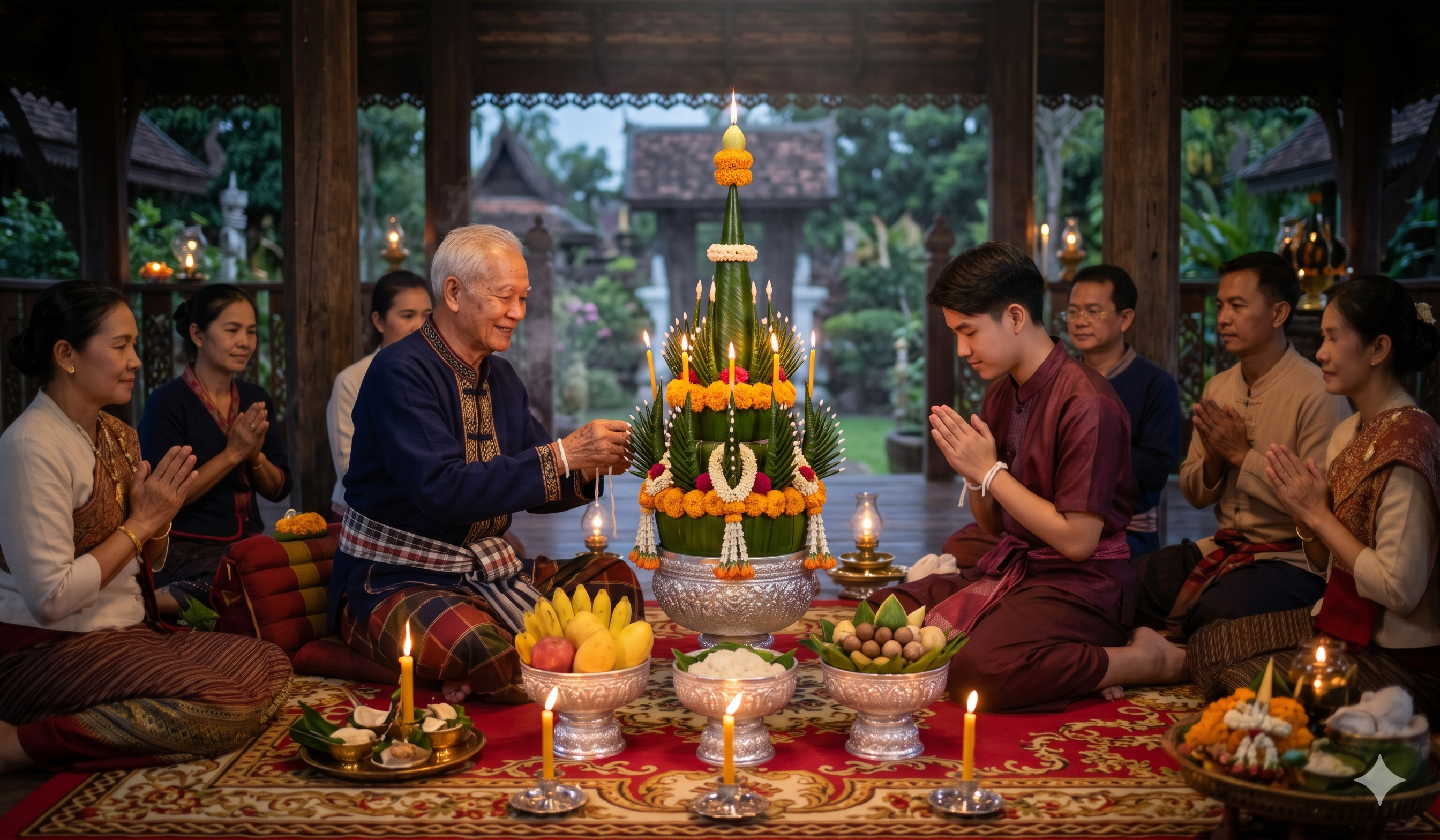
A third strand of Lanna spiritual life — the Brahmanical tradition inherited from ancient Indian influence.
The sukhwan ceremony is perhaps the most widespread Brahmanistic practice in everyday Lanna life. Performed at births, ordinations, weddings, house blessings, and moments of illness or distress, it involves an elder tying a white sacred thread around the wrists of the person being honoured while reciting blessings. The thread is believed to bind the khwan — the vital essence or soul-force — to the body, bringing the person into a state of wholeness and protection.
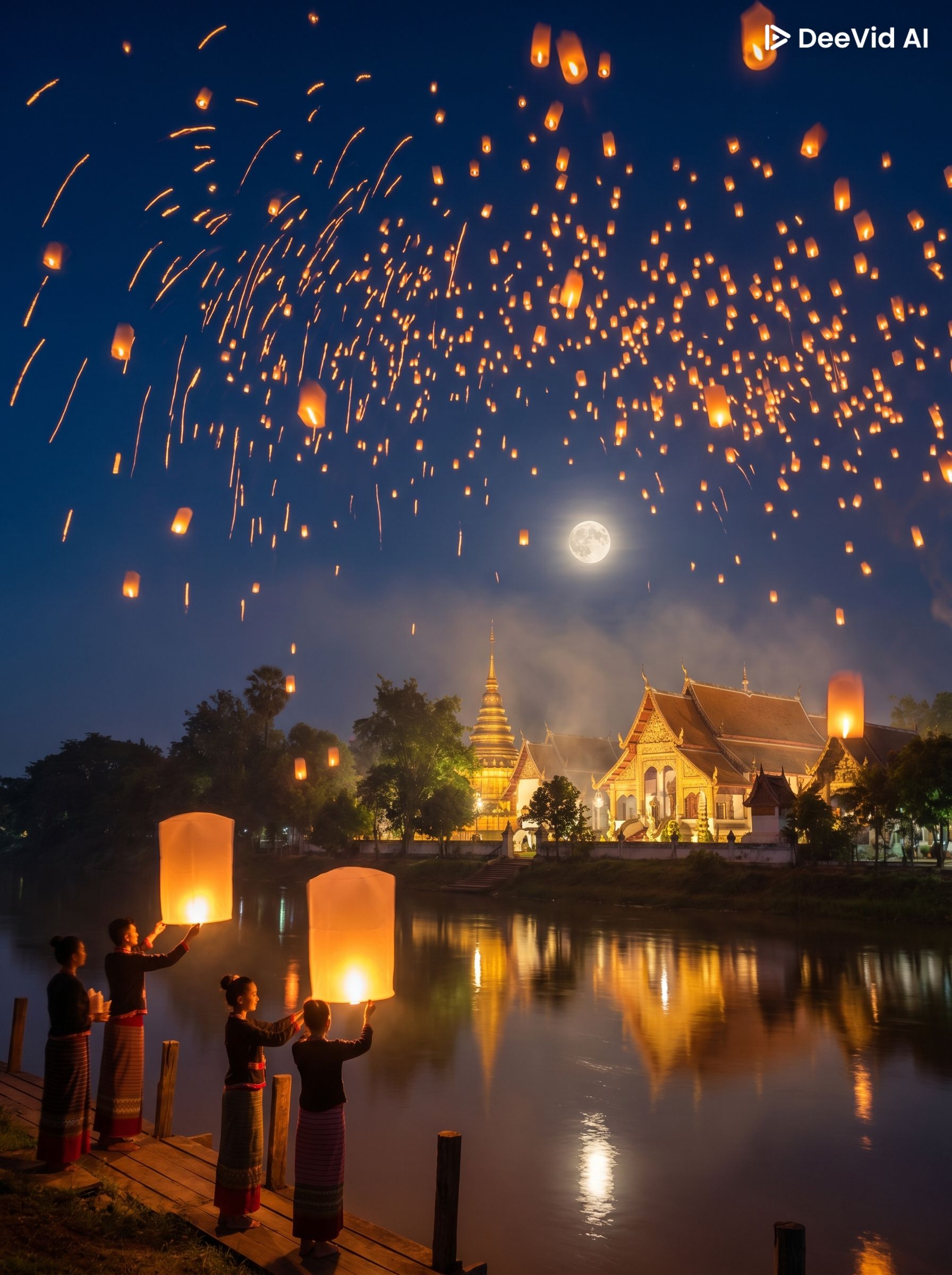
Yi Peng and the Lantern Festival: Faith Made Visible.
No discussion of Lanna spirituality is complete without the Yi Peng lantern festival, held annually on the full moon of the second month of the Lanna calendar — typically in November. On this night, thousands of paper lanterns (khom loi) are released into the night sky above Chiang Mai, each one carrying prayers and the merit-making energy of the person who lights it.
In the Lanna understanding, releasing a lantern symbolises the letting go of misfortune, illness, and negative karma. Yi Peng is today recognised as one of the most beautiful religious spectacles in the world, yet for the Lanna people it remains primarily an act of faith — a luminous dialogue between the earthly and the sacred.
Sawasdee! I'm a passionate freelance writer inspired by Thailand's rich culture and everyday stories. I explore everything from historic temples and village traditions to street food flavors and modern city life, turning real experiences into vivid narratives that connect readers to the heart, spirit, and charm of Thailand.
All author postsRelated posts
-
Wat Ban Rai — The Legacy of Luang Phor Koon.
Wat Ban Rai and Luang Phor Koon, Nakhon Ratchasima..
-
The Sanctuary of Truth, Pattaya Thailand.
The northern coast of Pattaya, overlooking the Gulf of Thailand..
-
5 Most Popular Thai Yantra Tattoo Designs Worldwide.
Sacred Sak Yant tattoos carry protective blessings and ancient.


4 Comments
-
.jpg) Marisa Mintraluk Reply17 July 2025, 6:05 PM
Marisa Mintraluk Reply17 July 2025, 6:05 PMThe sacred objects and protective amulets of Lanna tradition are deeply fascinating, carrying centuries of faith, spiritual power, and cultural beauty within every carefully crafted piece.
-
.jpg) Coner cincha Reply18 July 2025, 10:19 PM
Coner cincha Reply18 July 2025, 10:19 PMI’m fascinated by how Lanna spirituality beautifully preserves ancient Brahmanical influences, blending wisdom, ritual, and faith into a timeless cultural identity full of mystery and grace.
-
.jpg) Vinunya Mahaintong Reply18 July 2025, 12:39 PM
Vinunya Mahaintong Reply18 July 2025, 12:39 PMYi Peng is pure magic. Watching thousands of lanterns rise into the night sky feels like seeing faith, hope, and beauty floating together. A breathtaking tradition that captures the soul of Lanna culture so perfectly.
-
-
 Wichi tomonsuk Reply19 July 2025, 8:25 PM
The Sukhwan ceremony is such a beautiful and meaningful tradition. I truly admire how a simple white thread can symbolize protection, healing, and spiritual balance. The belief in calling back the khwan to restore wholeness feels deeply touching and timeless. Lanna culture carries such graceful wisdom and warmth through this sacred ceremony.
Write a comment