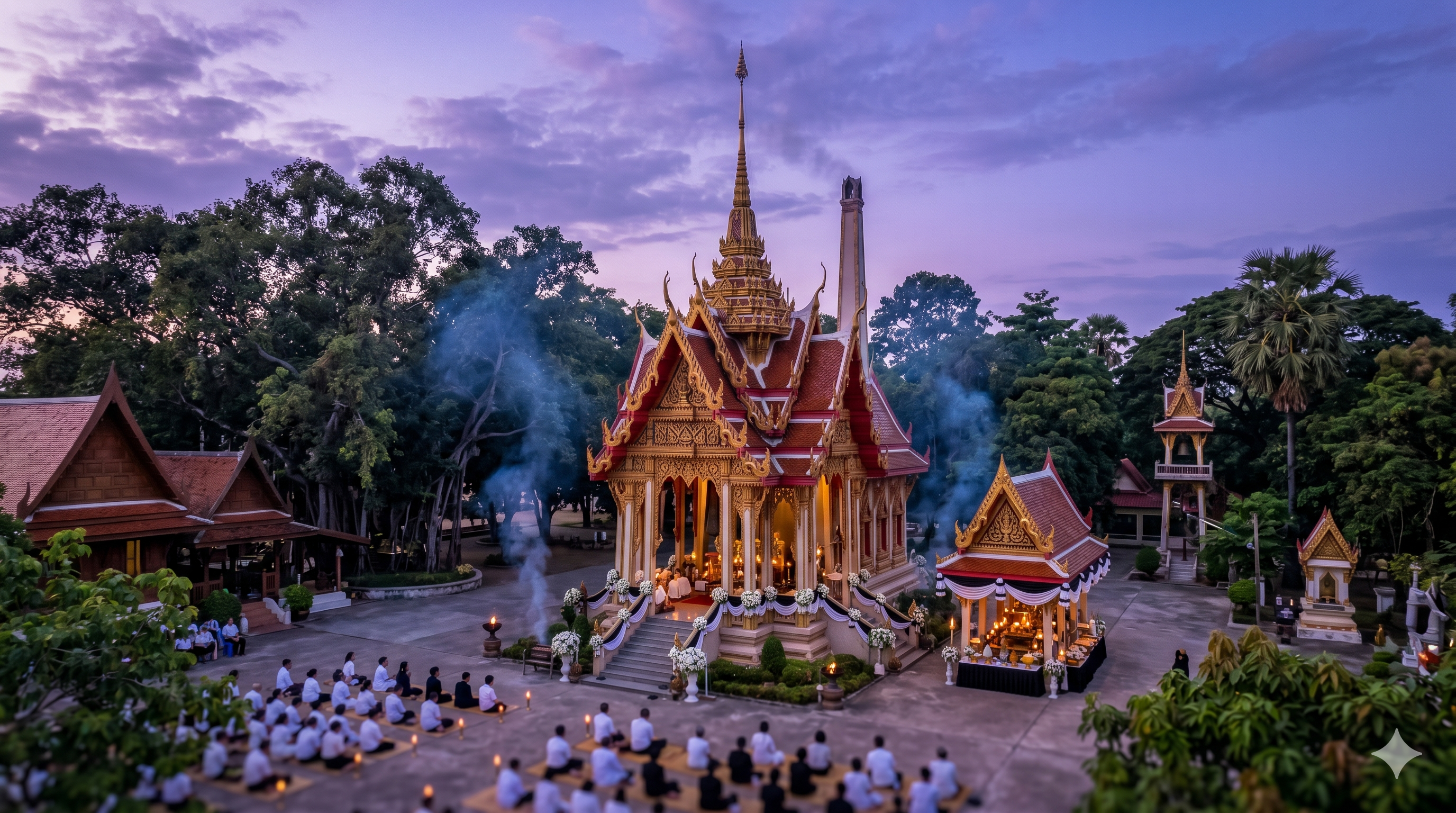

Beliefs Surrounding Cremation Ceremonies in Thailand
IThailand, death is not an ending — it is a passage. The cremation ceremony, known in Thai as ngan phao sop, stands at the heart of Thai Buddhist funerary tradition as one of the most spiritually significant events in a person's life cycle. Rooted in Theravada Buddhist teachings on impermanence, the rites surrounding cremation are elaborate, deeply symbolic, and shaped by centuries of cultural and religious belief that weave together Buddhism, animism, and Brahmanistic ritual into a single profound act of farewell.
The Spiritual Meaning of Fire
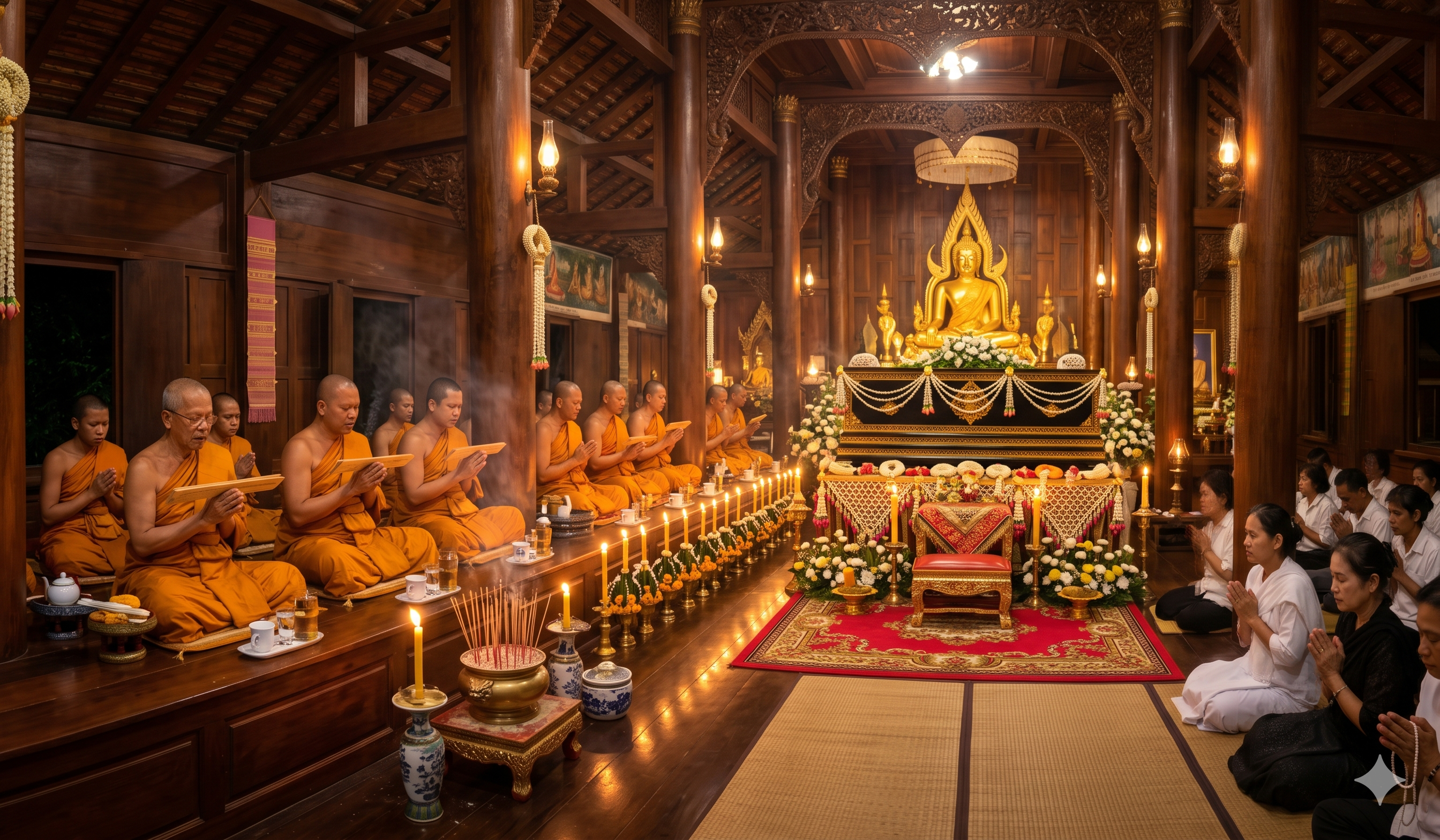
Fire as liberation — the Buddhist understanding of cremation.
In Thai Buddhist belief, fire is not an instrument of destruction but of purification and release. The flames of the funeral pyre are understood to sever the final attachment between the consciousness and the physical body, allowing the winyan — the spiritual essence — to depart freely and begin its journey toward rebirth. Without this act of release, it is believed that the spirit may linger, confused and bound to the material world.
The Buddha himself was cremated after his passing, and this precedent gives the practice its highest spiritual authority in Theravada tradition. For Thai Buddhists, choosing cremation is therefore not merely a cultural preference but a deeply considered act of faith — a final offering made to the departed that honours the teaching of impermanence and the hope of liberation from the cycle of suffering.
Preparing the Body and the Merit Days
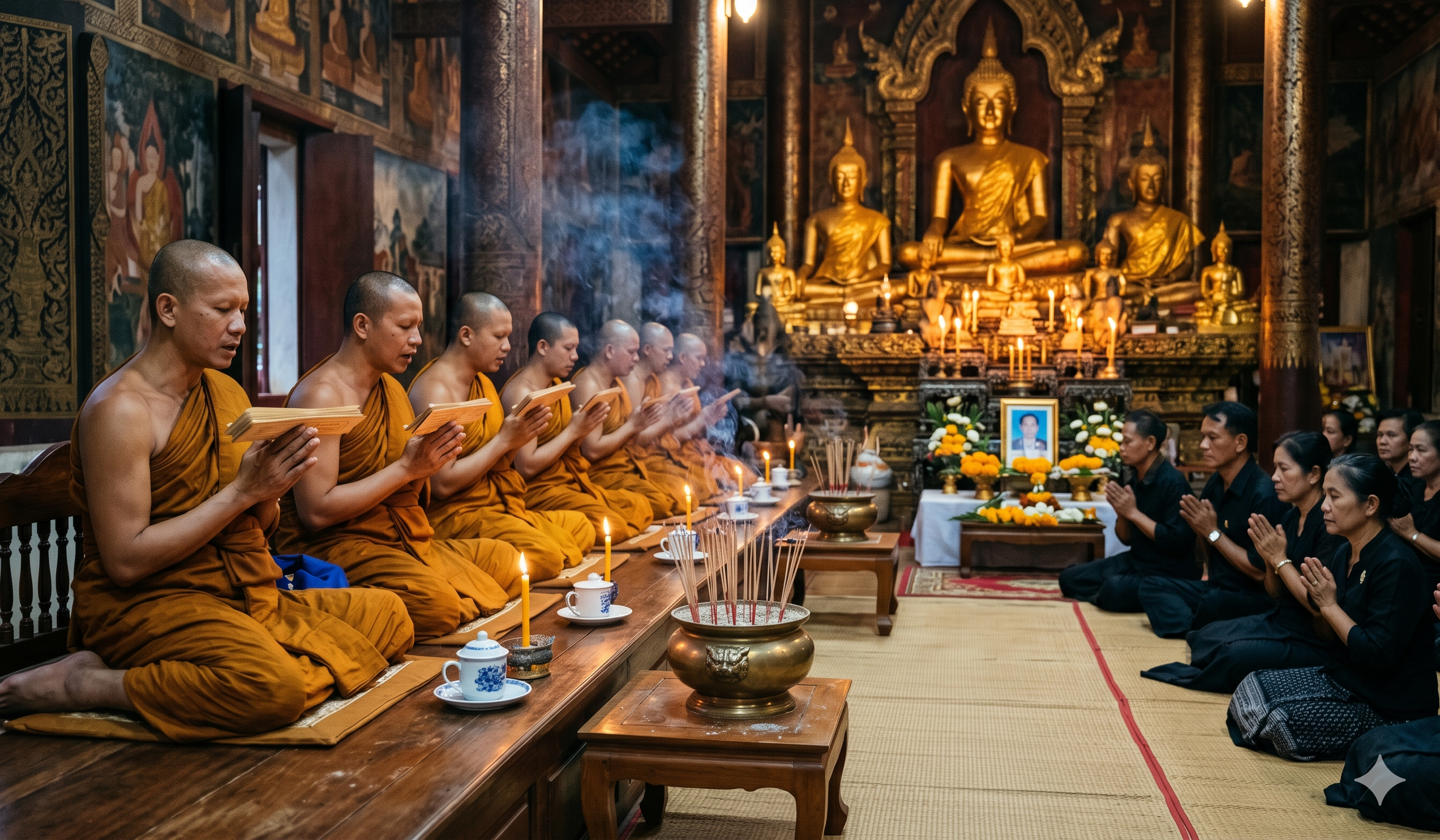
The days before cremation are filled with chanting, merit-making, and ritual care of the deceased.
Once a person passes, the body is washed and dressed in clean clothing by family members, often with a coin placed in the mouth — a remnant of the ancient belief that the dead require resources for their onward journey. The hands are arranged in a prayer position and bound with white thread, symbolising the continuity of devotion beyond death. A white cloth may be draped over the face, representing the veil between this world and the next.
The body is then placed in a coffin and brought to the temple, where it rests for a period that typically spans three, five, or seven days — auspicious odd numbers rooted in Buddhist numerology. Each evening during this period, monks gather at the temple to chant the suad mon, sacred Pali recitations that guide the spirit, generate merit for the deceased, and comfort those who mourn. Family and friends gather nightly, sharing food, stories, and prayers — transforming grief into collective remembrance.
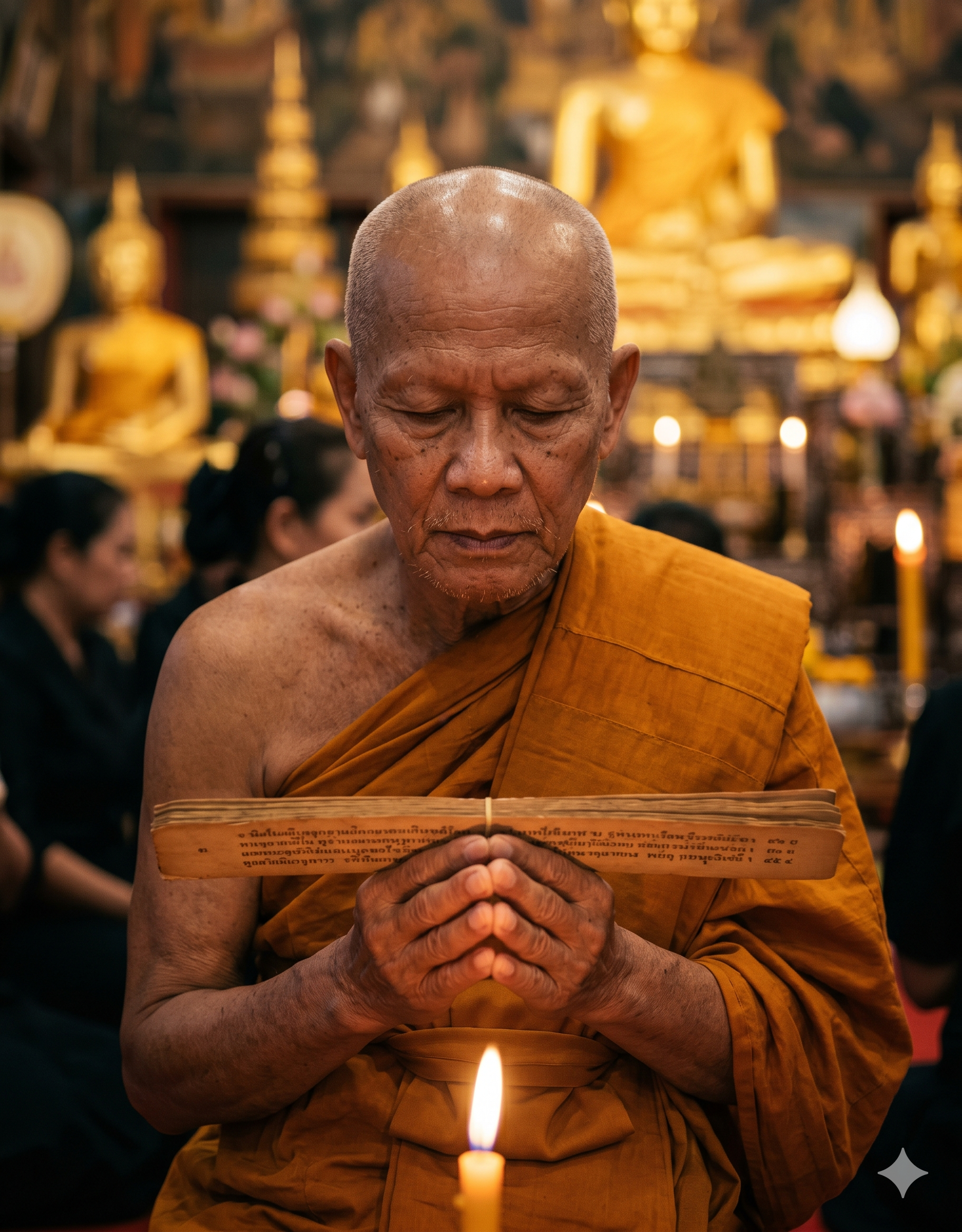
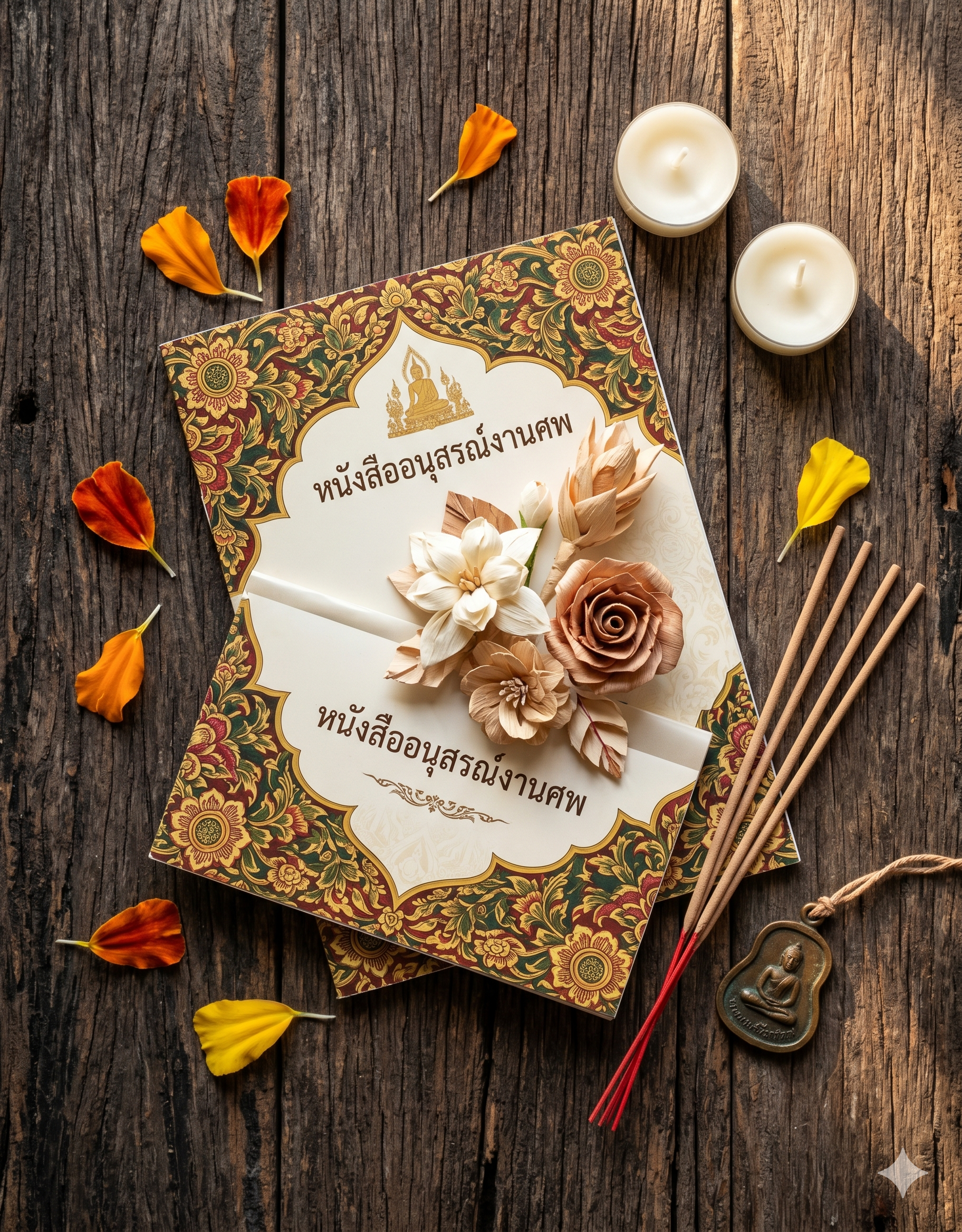
The merit book and the symbolic objects placed with the deceased.
A key element of Thai cremation preparation is the nangsue ngan sop — the funeral booklet — presented to each mourner. More than a simple programme, this small printed volume contains the life story of the deceased, photographs, and Buddhist teachings selected to offer comfort. It is one of the most personal and carefully prepared objects in the entire ceremony, reflecting the Thai belief that how a life is remembered matters as much as how it was lived.
Objects of significance are often placed inside the coffin before it is sealed: flowers, incense, the deceased's favourite belongings, and sometimes small amulets consecrated by monks. These items are understood not as material provisions but as expressions of love and as merit-generating offerings that accompany the spirit on its way.
The day of cremation: procession, sandalwood flowers, and the lighting of the pyre.
On the day of cremation, monks lead the final chanting session before the coffin is carried in a ceremonial procession around the crematorium — typically three times, clockwise, in the direction of auspicious circumambulation. The number three honours the Triple Gem of Buddhism: the Buddha, the Dharma, and the Sangha. Mourners follow slowly, dressed in black or white, holding incense and flowers.
The most emotionally charged moment of the ceremony comes when family members and guests are given dok mai chan — fragrant sandalwood flowers, often made from intricately folded paper or real wood shavings — to place upon the coffin before it enters the crematorium. This gesture is both farewell and merit-offering. For close relatives, the act of placing the sandalwood flower is understood as a final act of love, a last touch that carries one's prayers into the fire.

After the Fire: Bone Collection and the Continuing Bond
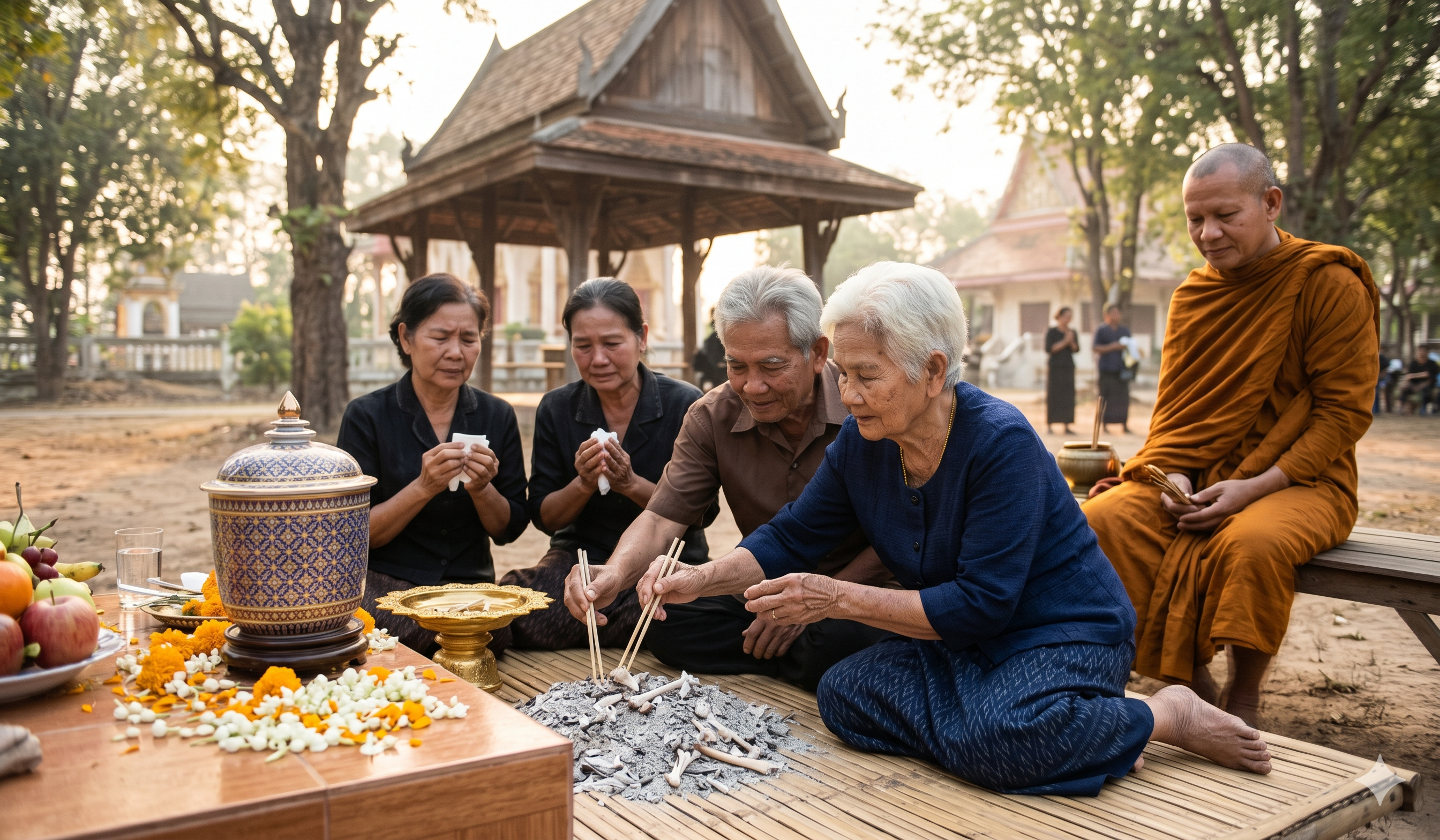
The gathering of bones is a tender ritual of continuity — the relationship does not end with the fire.
The morning after cremation, family members return to the temple for the kep kraduuk — the gathering of the bones. Using chopsticks or their bare hands, they carefully collect the remaining bone fragments from the ashes, beginning from the feet and working upward toward the skull, mirroring the natural orientation of the body. This specific order is followed so that the spirit is reassembled correctly, preventing confusion in the afterlife.
The collected remains are placed in an urn and may be enshrined at a temple, kept in the family home on an ancestral altar, or — in a practice growing in popularity — scattered at sea or in a sacred river. Some families divide the ashes, keeping a portion close while dispersing the rest at a place of meaning to the deceased. In all cases, the spirit is believed to remain connected to the living through these physical remains, and regular merit-making ceremonies at the anniversary of the death maintain that bond across the years.
Sawasdee! I'm a freelance writer dedicated to uncovering the vibrant soul of Thailand. From the bustling streets of Bangkok to hidden cultural gems and local culinary wonders, I craft engaging stories that bring the Thai experience to life.
All author postsRelated posts
-
Wat Ban Rai — The Legacy of Luang Phor Koon: A Timeless Journey of Faith.
Wat Ban Rai and Luang Phor Koon, Nakhon Ratchasima..
-
Religion and Beliefs of the Lanna People in Northern Thailand.
From ancient animism and Theravada Buddhism to sacred rituals and protective spirits..
-
5 Most Popular Thai Yantra Tattoo Designs Worldwide.
Sacred Sak Yant tattoos carry protective blessings and ancient spiritual significance..


4 Comments
-
.jpg) Herman Miller Reply17 March 2025, 6:05 PM
Herman Miller Reply17 March 2025, 6:05 PMThe merit book and sacred objects are deeply touching symbols of love, remembrance, and spiritual guidance — a beautiful reflection of Thai faith and devotion beyond this life.
-
 Wilbur Haddock Reply18 May 2025, 10:19 PM
A profoundly beautiful farewell — the procession, sandalwood flowers, and sacred flames create a timeless expression of love, honor, and spiritual devotion within Thai tradition..
-
.jpg) Colene Landin Reply18 July 2025, 12:39 PM
Colene Landin Reply18 July 2025, 12:39 PMSuch a deeply moving tradition — gentle, sacred, and filled with enduring love beyond death. It beautifully reflects the spiritual bond that never truly fades.
-
-
.jpg) Jennifer Freeman Reply19 July 2025, 8:25 PM
Jennifer Freeman Reply19 July 2025, 8:25 PMThere is a haunting beauty in this sacred procession — a powerful expression of love, respect, and spiritual devotion woven deeply into Thai Buddhist tradition.
Write a comment