The Ceremony of Bathing Buddha Images for Good Fortune on Songkran Day
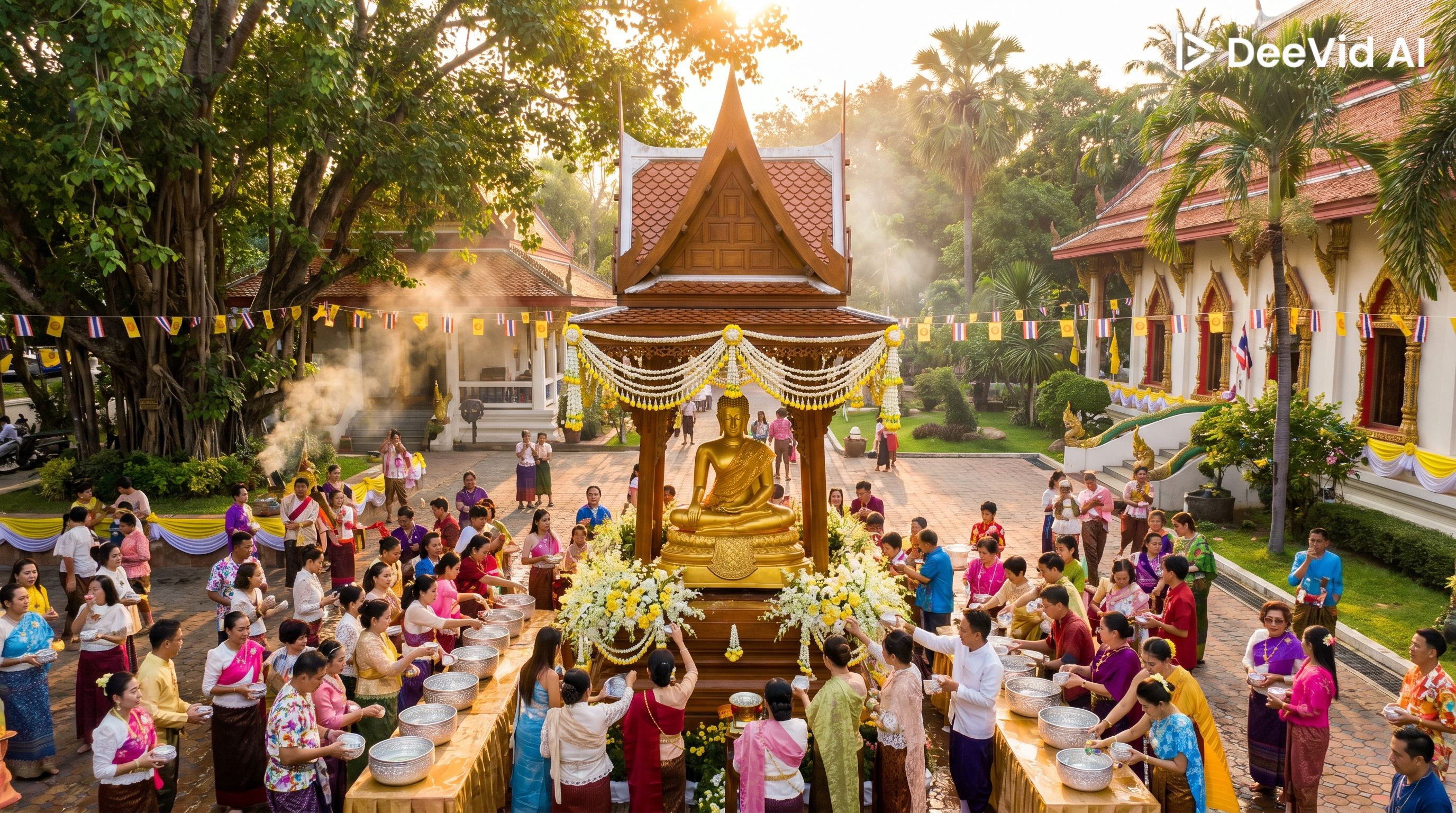
Every April, as the hottest days of the year settle across Thailand, a quieter and far more sacred tradition unfolds alongside the famous water festival. Before the streets fill with laughter and splashing, Thai people gather at their local temples to perform one of the most spiritually meaningful rituals of the Buddhist calendar — the bathing of Buddha images, known in Thai as song nam phra. This ancient ceremony, performed at the turning of the Thai New Year, carries within it centuries of belief in purification, renewal, and the power of sacred water to carry blessings from the divine world into everyday life.

The Sacred Meaning of Water at the New Year
Water as a vehicle of merit — why pouring water over the Buddha is an act of faith.
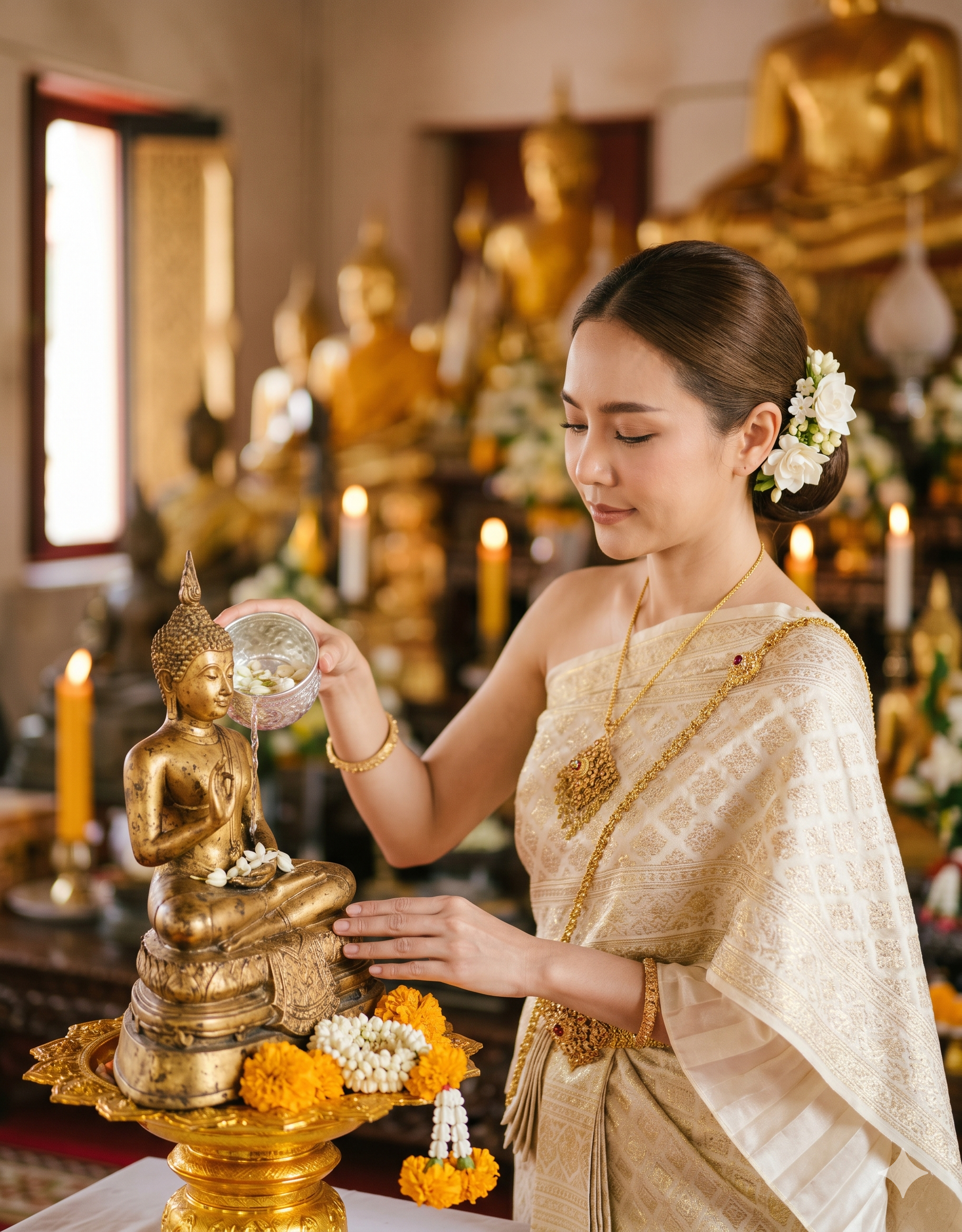
In Thai Buddhist understanding, water is not merely a physical substance. It is a medium through which intention, merit, and blessing can be transmitted. When a devotee carefully pours scented water over a Buddha image, they are not simply washing a statue — they are offering respect to the qualities the image represents: compassion, wisdom, and purity. The water that flows over the image becomes sanctified, and its touch upon the hands of the devotee is understood to transfer a measure of that purity to the person performing the rite.
The timing of this ceremony at the Thai New Year is deeply intentional. Songkran — derived from the Sanskrit word meaning "passage" or "movement of the sun" — marks the moment the solar calendar transitions from one year to the next. It is a threshold moment, a crack in time when the spiritual world is understood to be especially close. Performing song nam phra at this threshold is believed to wash away the accumulated misfortunes, sins, and spiritual impurities of the passing year, entering the new cycle clean, blessed, and open to good fortune.
The Preparation: Scented Water, Flowers, and the Chosen Image
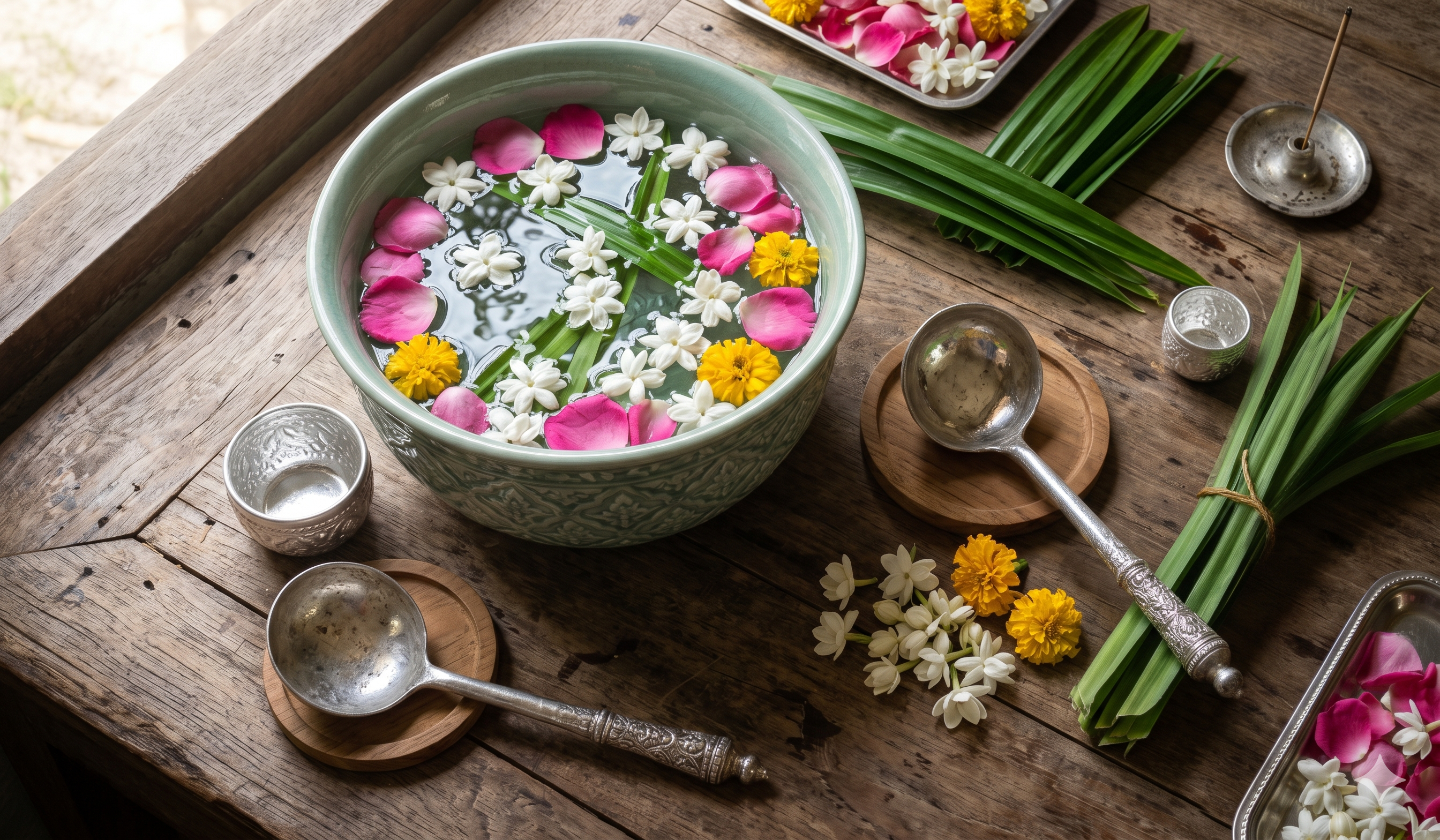
The water used in song nam phra is never ordinary — its preparation is itself an act of devotion.
In the days before Songkran, families and temple communities prepare the ceremonial water with careful attention. Clean water is infused with fragrant flowers — most commonly white jasmine, rose petals, and pandanus leaves — and sometimes mixed with a few drops of perfumed oil or sacred herbal water prepared by the temple monks. The resulting liquid carries both a beautiful fragrance and a layer of additional spiritual potency, its ingredients chosen for their associations with purity and auspiciousness in Thai and Brahmanistic tradition.
The Buddha images chosen for the ceremony are typically the most venerated in the temple — ancient images with accumulated spiritual power, or the principal image enshrined in the main hall. In some communities, a beloved image is carried in a ceremonial procession through the village or neighbourhood before the bathing rite begins, allowing those unable to attend the temple to pay their respects and receive a blessing as the image passes their door.
Performing the rite: how to bathe a Buddha image with correct intention and reverence.
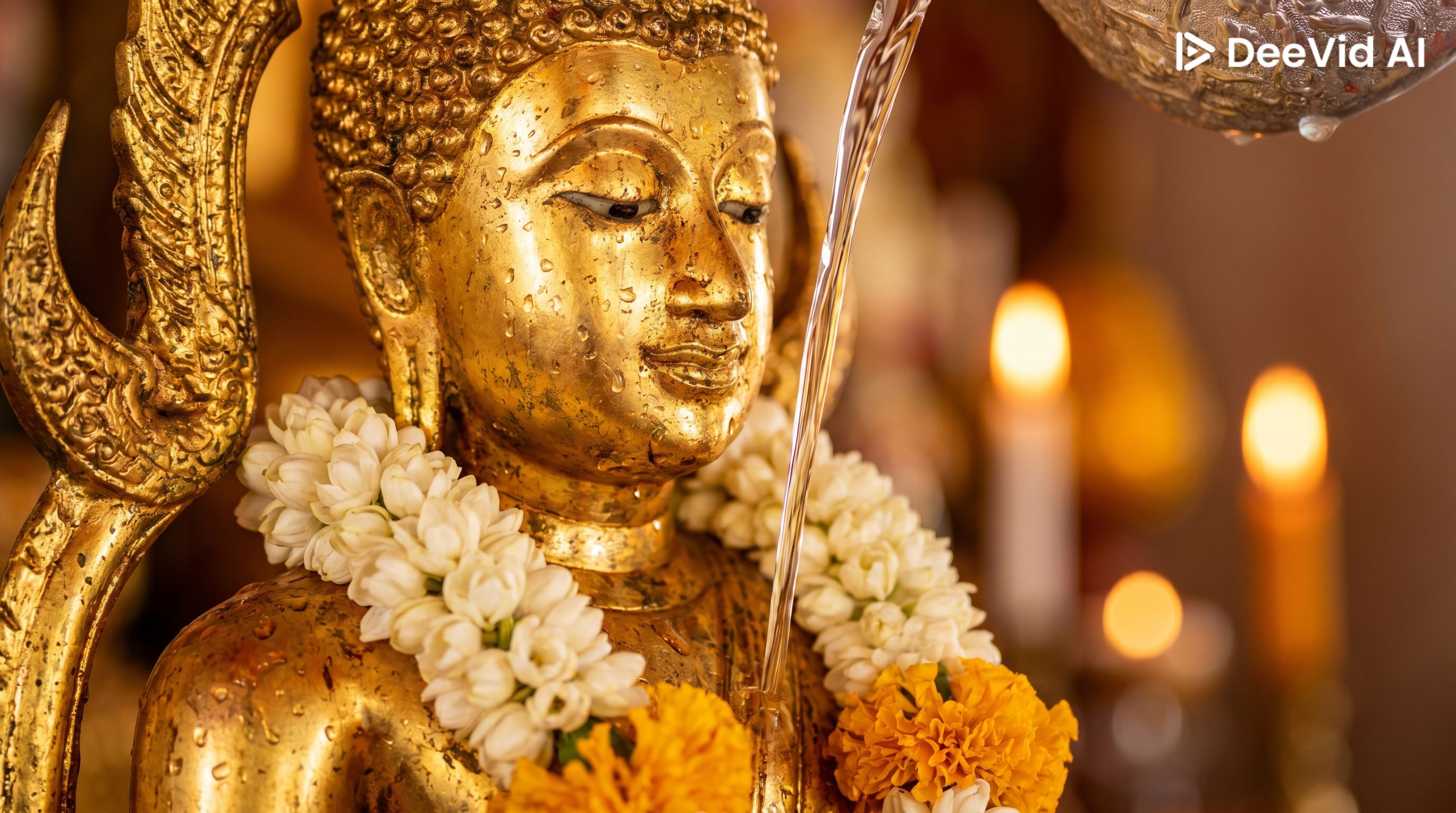
At the temple, the Buddha image is placed on an elevated platform or within a specially constructed wooden frame that allows water to flow freely around it and collect below. Devotees queue in an orderly and respectful manner, each holding a small silver or brass bowl filled with the prepared scented water. When their turn arrives, they press their palms together in a wai, offer a silent prayer or intention for the year ahead, and then gently pour the water over the image from the right shoulder downward — following the auspicious direction used in all Buddhist ceremonial acts.
The water collected at the base of the image is considered especially sacred after having flowed over the Buddha. In many temples, this collected water is poured into small bottles or given to the elderly as a blessing liquid. Families bring it home and sprinkle it gently over the heads of their elders as a gesture of respect — a parallel act of blessing that connects the veneration of the Buddha image directly to the honouring of one's own ancestors and parents.
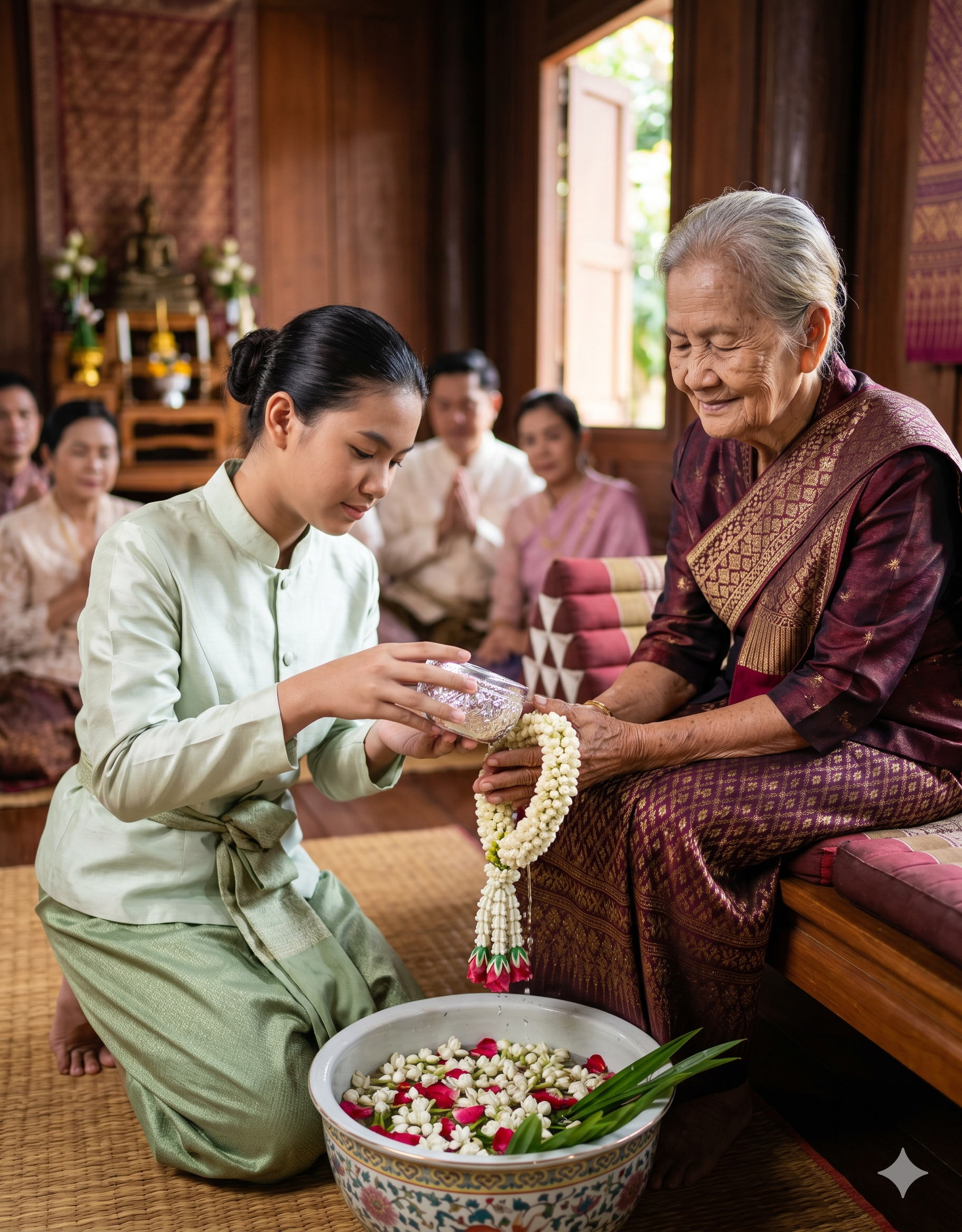
Pouring water on elders — the human dimension of the Songkran blessing ceremony.
The act of bathing the Buddha image does not stand alone. Immediately following the temple ceremony, Thai families participate in the pouring of scented water over the hands of their elderly relatives — grandparents, parents, revered teachers — while kneeling respectfully before them. This practice, called rot nam dam hua, mirrors the temple ritual and extends the spirit of Songkran from the sacred to the human.
In receiving the water on their hands and offering blessings in return, elders become living channels of the same goodwill that flowed through the ceremony at the temple. Their blessing — spoken quietly in the ear of the younger person as water pours — is understood to carry real spiritual weight, drawing on the merit accumulated over a lifetime of virtuous living. For many Thai families, this quiet moment between generations is the emotional heart of Songkran, far more significant than any water fight in the streets.
Regional Variations and the Phra Buddha Sihing Procession
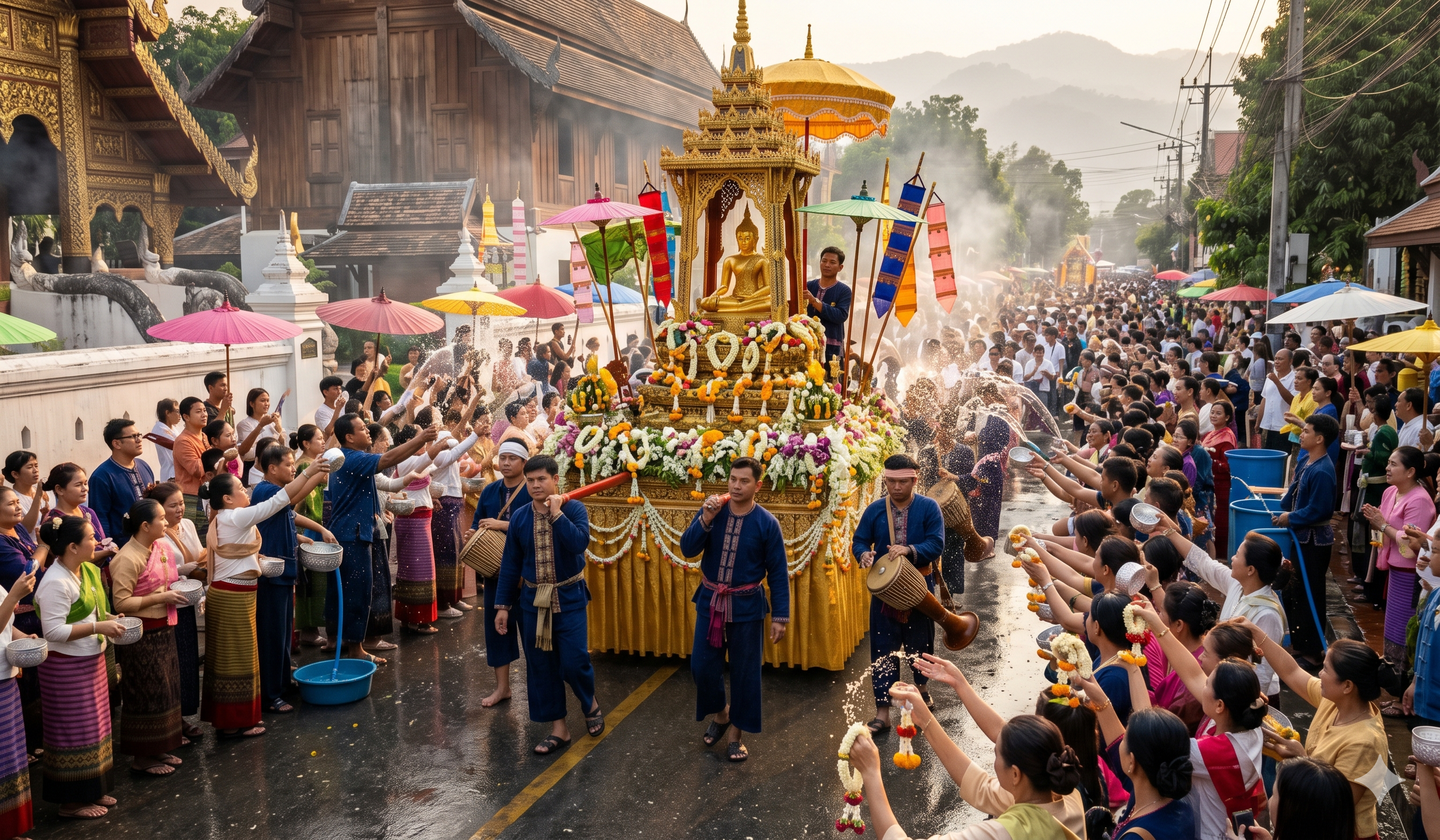
Across Thailand, the song nam phra ceremony takes on distinct regional character — most grandly in Chiang Mai.
In Chiang Mai, the ceremony reaches its most elaborate expression in the annual procession of the Phra Buddha Sihing — one of the most sacred Buddha images in northern Thailand, normally enshrined at Wat Phra Singh. During Songkran, this ancient image is brought out and carried through the city on an ornate float, accompanied by monks chanting, traditional musicians playing, and thousands of devotees lining the streets to pour water as it passes. The water poured onto the image in this procession is believed to carry extraordinary blessings, and the opportunity to touch the collected water is considered a rare and powerful merit-making event.
In Bangkok, the Grand Palace and Wat Pho host their own formal song nam phra ceremonies attended by members of the royal family, reinforcing the deep connection between the Thai monarchy, Buddhism, and the continuity of the Thai nation. For ordinary Thai people across the country, however, the ceremony remains most meaningful when performed close to home — at the neighbourhood temple where one was blessed as a child, in the company of family, with the quiet intention of entering a new year with a clean heart and an open spirit.
Sawasdee! I'm a freelance writer dedicated to uncovering the vibrant soul of Thailand. From the bustling streets of Bangkok to hidden cultural gems and local culinary wonders, I craft engaging stories that bring the Thai experience to life.
All author postsRelated posts
-
Beliefs Surrounding Cremation Ceremonies in Thailand.
Explore the profound spiritual beliefs and rituals of Thai Buddhist cremation ceremonies..
-
Religion and Beliefs of the Lanna People in Northern Thailand.
From ancient animism and Theravada Buddhism to sacred rituals and protective spirits..
-
Wat Ban Rai — The Legacy of Luang Phor Koon: A Timeless Journey of Faith.
Wat Ban Rai and Luang Phor Koon, Nakhon Ratchasima..


4 Comments
-
Herman Miller Reply17 July 2020, 6:05 PM
Lorem ipsum is simply dummy text of the printing and typesetting industry. Lorem ipsum has been the industry's standard dummy text ever since the make book.
-
Wilbur Haddock Reply18 July 2020, 10:19 PM
Lorem ipsum is simply dummy text of the printing and typesetting industry. Lorem ipsum has been the industry's standard dummy text ever since.
-
Colene Landin Reply18 July 2020, 12:39 PM
Lorem ipsum is simply dummy text of the printing and typesetting industry. Ipsum has been the industry's standard dummy text.
-
-
Jennifer Freeman Reply19 July 2020, 8:25 PM
Lorem ipsum is simply dummy text of the printing and typesetting industry. Lorem ipsum has been the industry's standard dummy text ever since the make a type specimen book.
Write a comment